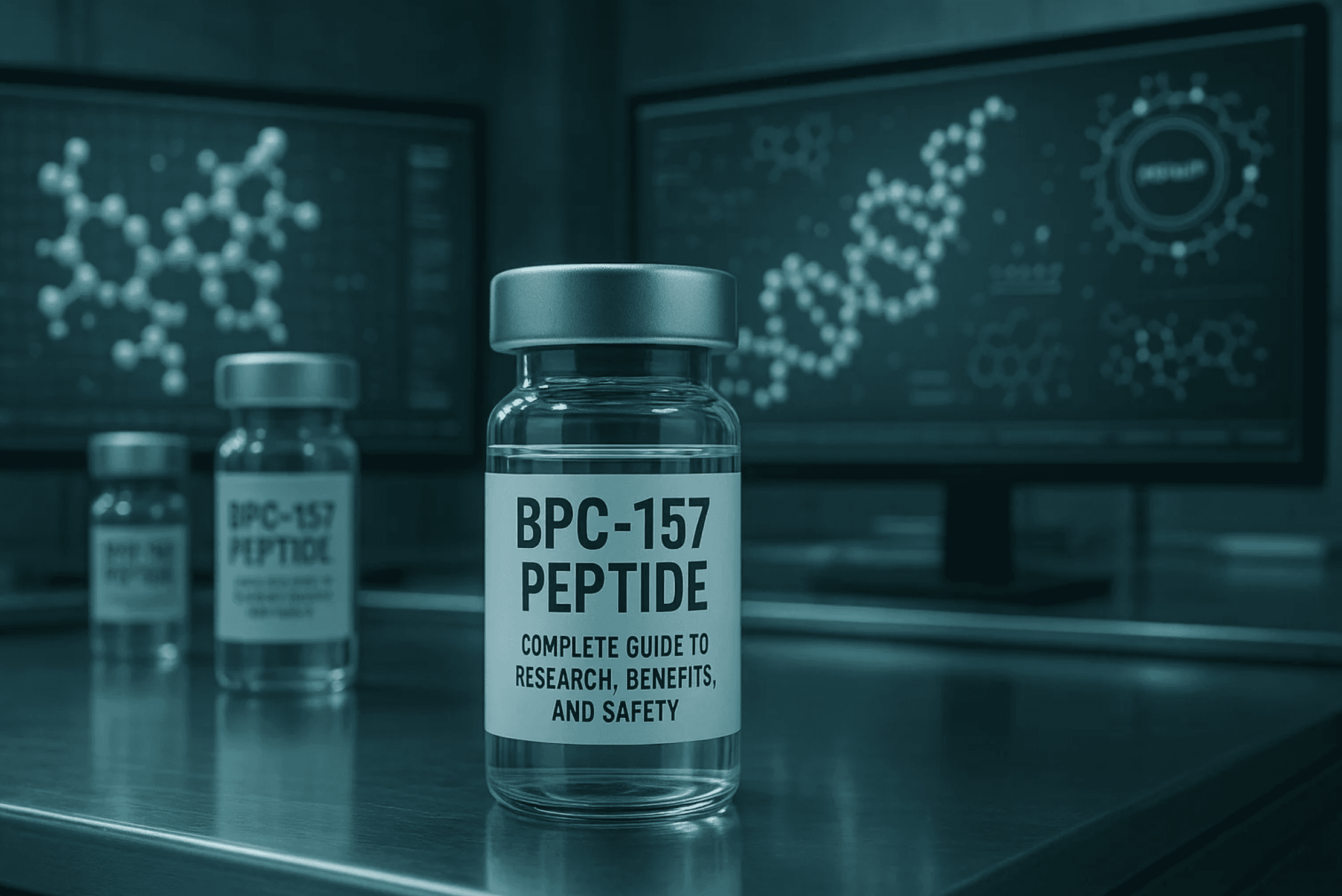

Peptides are having a moment. Short chains of amino acids, they are being promoted online for weight loss, muscle growth, injury recovery, sleep and skin. A column by Sally Pipes of the Pacific Research Institute, published by Newsmax and republished on Yahoo News on 19 October 2026, argues that this consumer market has outrun both the science and the safeguards. This is our summary of the concerns it raises, and what they mean for clinicians whose patients are buying these products. The column is linked at the end.
A case that shows the risk
The column cites a Forbes report from 25 September 2026 about a 35-year-old woman who reacted severely after injecting sermorelin, a growth-hormone-releasing peptide, bought from the gray market. Her heart rate fell to 20 beats per minute, her blood pressure crashed and she briefly stopped breathing.
She was not using an obscure compound. Sermorelin is one of the better-known peptides, which is part of the point: a familiar name says nothing about what is actually in an unregulated vial, how it was made or how much of it there is.
How big the market has become
According to the column, a researcher who tracks the market told Forbes he follows close to 1,000 online peptide storefronts, and estimates put the market at up to $4 billion. Popular products include BPC-157, promoted for healing injuries, GHK-Cu and CJC-1295, which is marketed to raise growth hormone. Stanford researchers reported this summer that some peptides tested only in mice were already being sold online for people to inject themselves.
What the FDA and testing have found
- The FDA says it has limited safety information on BPC-157, and no data on human exposure to TB-500.
- The FDA has raised concerns about ipamorelin after a clinical study linked intravenous use to serious adverse events, including deaths.
- An independent lab reported that 17% of more than 1,200 peptide samples it tested contained heavy metals above safety limits.
- In August 2026 the FDA sent warning letters to several online peptide sellers. Among the products it found was retatrutide, an experimental weight-loss drug that is not FDA-approved.
- A coalition of 20 state attorneys general wrote to federal officials about Chinese-sourced ingredients in compounded weight-loss drugs, citing reports that some suppliers previously tied to fentanyl-precursor supply chains now sell cosmetic and weight-loss peptides.
The “research use only” label
Many of these products are labelled “research use only” or “not for human consumption”. The column points out that the same sellers often supply dosing guides, dosage calculators and bacteriostatic water for preparing injections. The label keeps the product outside drug regulation; the rest of the listing shows who it is really sold to.
It is also worth remembering that compounded drugs, even when lawfully prepared, are not FDA-approved. The FDA does not review them for safety, effectiveness or quality before they reach patients, which makes the choice of pharmacy and the prescriber’s judgement all the more important.
What the column calls for
Pipes argues that the FDA and Customs and Border Protection should do more to stop unlawful imports before they reach consumers, and that federal authorities should go after sellers who market unapproved drugs for human use while describing them as laboratory chemicals.
What this means for clinicians
Patients are already using these products, often without telling anyone. A few practical steps follow from what has been reported:
- Ask about peptide use directly, as you would about supplements and over-the-counter medicines, and record the product, the source and the dose.
- Treat an unexplained reaction in a patient who injects peptides as a possible product problem: contamination, the wrong compound or the wrong dose.
- Where a peptide is clinically appropriate, prescribe it through a licensed, accredited compounding pharmacy that can show its testing, never through a “research” supplier.
- Be honest with patients about how thin the human evidence is for many popular peptides, and about what is and is not known.
Peptide therapy has real clinical promise, and that promise depends on clinicians who understand the evidence, the pharmacology and the regulations. That is the gap our peptide training is built to close.
Sources
- Sally Pipes, Pacific Research Institute. Peptide dangers result in hospitalizations. Newsmax, republished by Yahoo News, 19 October 2026.